Kingsbridge
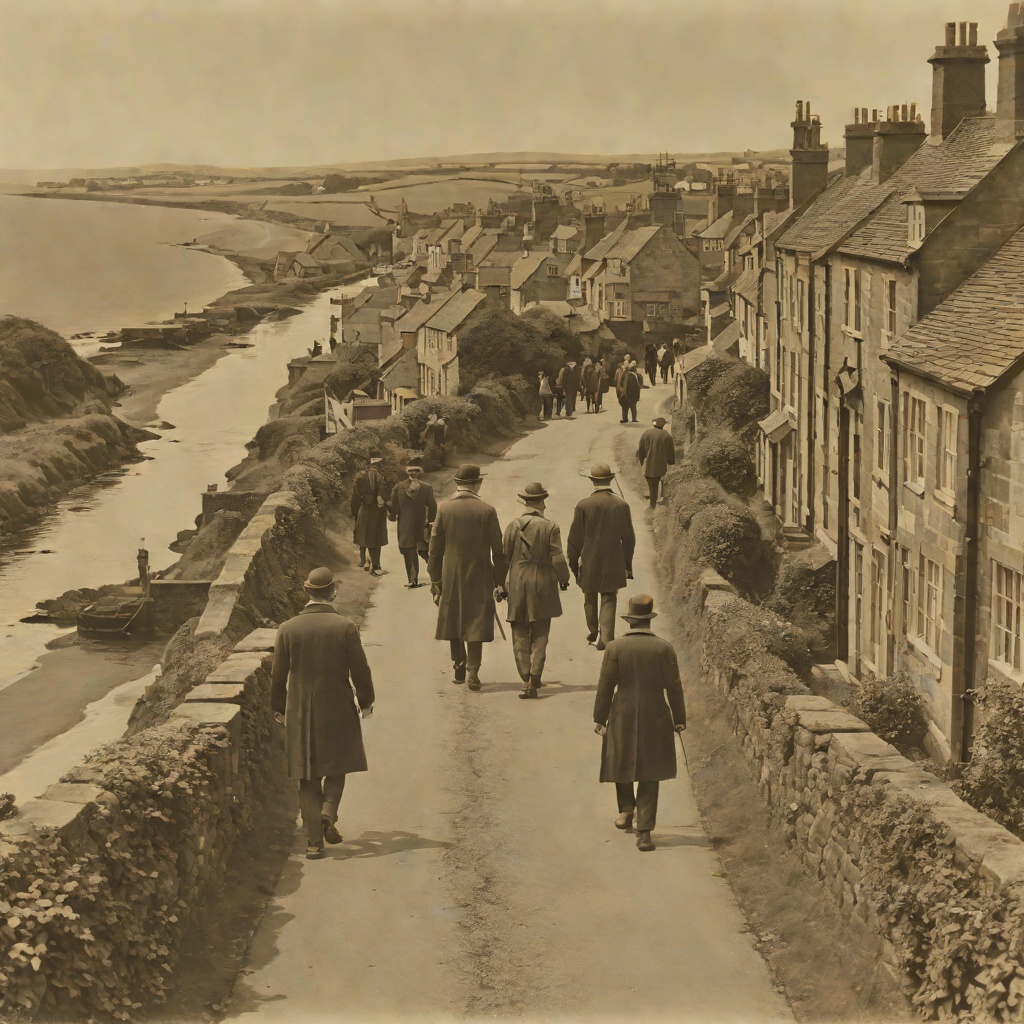
The Unlikely Pilgrimage of Harold FryKingsbridge is the Devon market town where Harold Fry and his wife Maureen have lived for forty-five years, and the fixed point from which his entire pilgrimage departs and against which its meaning is measured. It is the place of the letter, the clipped lawn, the net curtains, and the marriage that has quietly curdled into estrangement — the ordinary world that the walk must redeem. The town is named in the novel's opening chapter, 'Harold and the Letter,' as the home of the Frys, and it is from here that Harold sets out on what becomes a six-hundred-and-twenty-seven-mile journey to Berwick-upon-Tweed. Kingsbridge functions as the novel's emotional and geographical anchor: the place Harold leaves, the place Maureen waits, and the place to which the story's memory of happiness and loss repeatedly returns.
The Setting of the Fry Household
The Frys live at 13 Fossebridge Road, a house built on a hill above Kingsbridge, enjoying what estate agents call an elevated position, with far-reaching views over the town and countryside. Their front garden slopes at a precarious angle towards the pavement below, and plants wrap themselves round bamboo stakes as if hanging on for dear life. The morning the letter arrives is an ordinary one in mid-April that smells of clean washing and grass cuttings; Harold sits at the breakfast table, freshly shaved, in a clean shirt and tie, with a slice of toast he isn't eating, gazing beyond the kitchen window at the clipped lawn, spiked in the middle by Maureen's telescopic washing line and trapped on all three sides by the neighbours' closeboard fencing. The house is a study in domestic order and emotional sterility: the vivid pink of the bathroom suite makes Harold feel he shouldn't be there, and the net curtains through which he peers at the world become a recurring image of the enclosed, curtained life he is about to abandon.
The Point of Departure
Kingsbridge is where the pilgrimage begins, but it is also where Harold's old life is most vividly embodied. When he strides down the steep concrete path a little faster than he might wish, he notices five new dandelions and thinks that maybe this afternoon he will get out the Roundup — a thought that shows how completely his mind is still occupied with the small rituals of suburban maintenance. The town is also the home of his neighbour Rex, a short man with tidy feet, a small head, and a very round body, who has been widowed six months, at about the time of Harold's retirement, and who likes to talk about how hard life is at great length. It is from the phone box outside a pub near Kingsbridge that Harold makes his first call to Maureen, telling her he is going to walk to Berwick; her reply — 'Well, you head off to Berwick, Harold. If that's what you want. I'd like to see you get past Dartmoor' — is the voice of the town's scepticism, the domestic world's refusal to believe in the journey. The words Harold, Burger, Walk roll around her head, and in the midst of them come two more: Queenie Hennessy. After all these years.
The Town as Memory and Contrast
Kingsbridge is not only the starting point but the repository of the Frys' shared past. It was to Kingsbridge that Harold and Maureen first came forty-five years ago when they were newly married, knowing no one but needing only each other. Maureen recalls to Rex how she wanted to be everything Harold had never had, to give him a home and a family: she learned to cook, made curtains, found wooden crates and hammered them together to make a coffee table, while Harold dug vegetable plots at the front of the house where she grew potatoes, beans, and carrots. 'We were very happy,' she says, and the repetition of the phrase — 'Very happy,' she said again — carries the ache of a happiness that has since been lost. The town is also the site of the family's deepest wound: it was at Bantham, near Kingsbridge, that David almost drowned, and Maureen has so many times blamed Harold for that day. When she and Rex sit in front of the dunes at Bantham, she thinks of how much David had wanted a dog, and fumbles for her handkerchief. Kingsbridge, then, is the landscape of both the marriage's founding hope and its long erosion.
The Town in the Wider World
As Harold's journey gains fame, Kingsbridge becomes known to the wider world. The local paper runs the story under the headline 'THE UNLIKELY PILGRIMAGE OF HAROLD FRY,' describing how a retired man from Kingsbridge (also home to Miss South Devon), in walking to Berwick without money, phone, or maps, is proving himself a hero for the twenty-first century. A handful of journalists wait on Maureen's crazy paving, and a local-television crew lodges beyond Rex's privet hedge. The town is thus transformed from a private domestic setting into a public landmark, the origin point of a story people want to hear. Yet for Maureen, the town's new fame does nothing to ease her solitude: despite the flourishing of her garden, the friendship with Rex, and the letters of support that arrive from well-wishers and cancer victims every day, there are times when she feels bereft, and she returns to the bedroom, draws the curtains, and, lying under the duvet, wails. Kingsbridge remains the place of waiting, the fixed point from which the journey is measured on Rex's map of England, where a blue thread creeps north from Bath towards Sheffield, marking Harold's progress.
The Return and the Measure of the Journey
Kingsbridge is the implicit destination of the journey's meaning even though Harold walks away from it. The town is the 'ordinary world' of the hero's journey, the place of clipped lawns and closeboard fencing that Harold must leave in order to find himself. When he walks through the open land, he feels himself part of something bigger than simply Harold; when he reaches Exeter, the city's fury threatens to overturn his slow inner rhythm, and he longs to be back on the open land. Kingsbridge, by contrast, is the place where he was trapped — the place where the only thing to do was mow the lawn, and he had done that yesterday. The town's significance is thus double: it is the site of the marriage's happiness and its estrangement, the place of both the vegetable plots and the wailing under the duvet. It is the measure against which the journey's transformation is judged, the fixed point that makes the pilgrimage legible. When Harold finally arrives at St Bernadine's Hospice, eighty-seven days after setting out to post a letter, having walked six hundred and twenty-seven miles including mistakes and diversions, the journey's meaning is inseparable from the town he left behind — the town where the letter arrived on a Tuesday, where the lawn was clipped, and where Maureen waited.